Stone Fire Pits
Natural stone creates a timeless focal point, and our masons shape and set each piece with care to build a beautiful fire pit that complements your landscape.

Service guide / San Diego
Planning a fire pit in San Diego: gas vs. wood-burning, safe seating distances, heat-proof materials, local fire rules and what to settle before building.
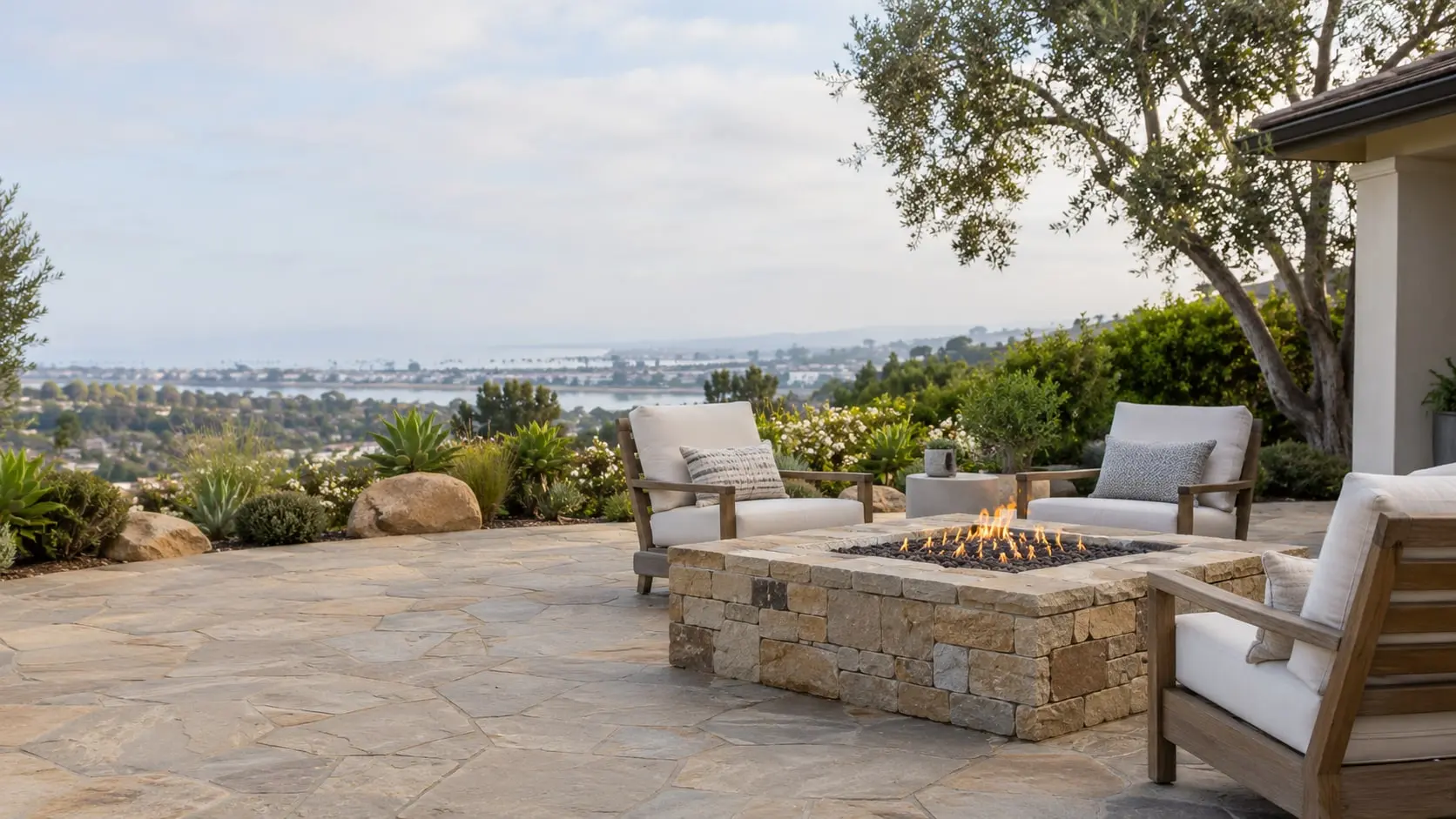
Fire pit construction in San Diego creates a warm, inviting gathering place where family and friends can enjoy cool evenings under the stars.
We build custom fire pits using natural stone, pavers, concrete, and brick, designed to match your patio, landscape, and home. Our team can add built-in seating, surrounding hardscape, and lighting to create a complete outdoor lounge area. Safety and craftsmanship guide every build, so we consider clearances, ventilation, and fuel type, whether you prefer a classic wood-burning pit or a convenient gas model. Each fire pit is constructed to be sturdy, attractive, and durable in sun and weather. It’s an affordable upgrade that instantly adds atmosphere and value to your backyard. Pair it with a paver patio or seating wall for a complete gathering space. Contact us today to design your custom fire pit in San Diego.
Natural stone creates a timeless focal point, and our masons shape and set each piece with care to build a beautiful fire pit that complements your landscape.
Pavers offer clean lines and consistent color, allowing you to match your patio, and we build these fire pits with solid footings and joints for lasting performance.
Choose the convenience of gas with flames or the classic crackle of wood, and we design each fire pit with proper venting, clearances, and fuel connections.
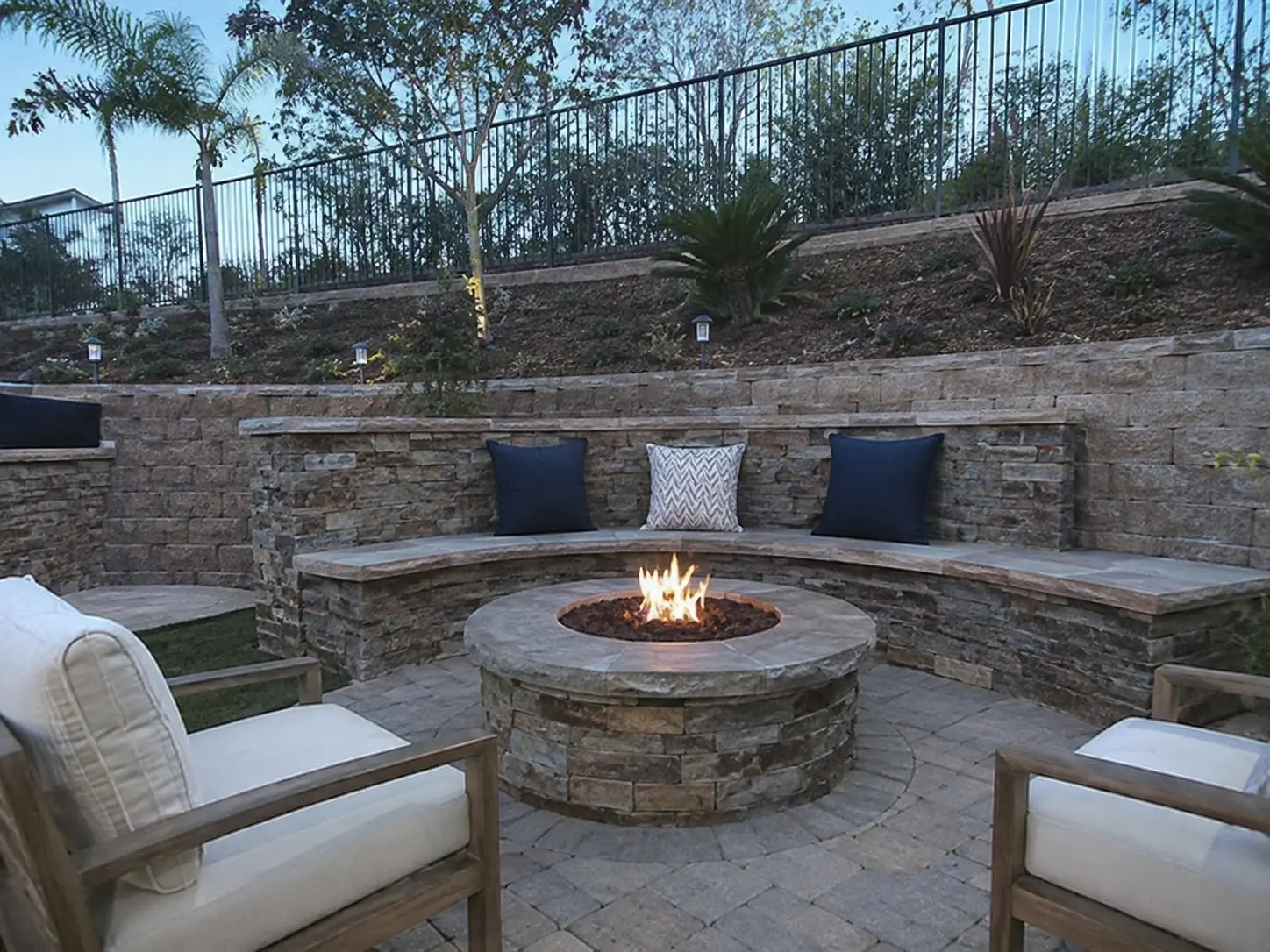
Curved benches and seating walls make your fire pit a true gathering place, giving guests comfortable spots to sit and talk while keeping everyone a safe distance away.
We build fire pits into new or existing patios, matching materials and patterns so the feature looks intentional and complete, and the area stays safe, level, and functional.
Our team considers wind, nearby structures, plants, and local rules when positioning your fire pit, ensuring a safe installation you can enjoy confidently with family and friends.
Fire pits come in several formats. Pick the one that matches how you will actually use it.
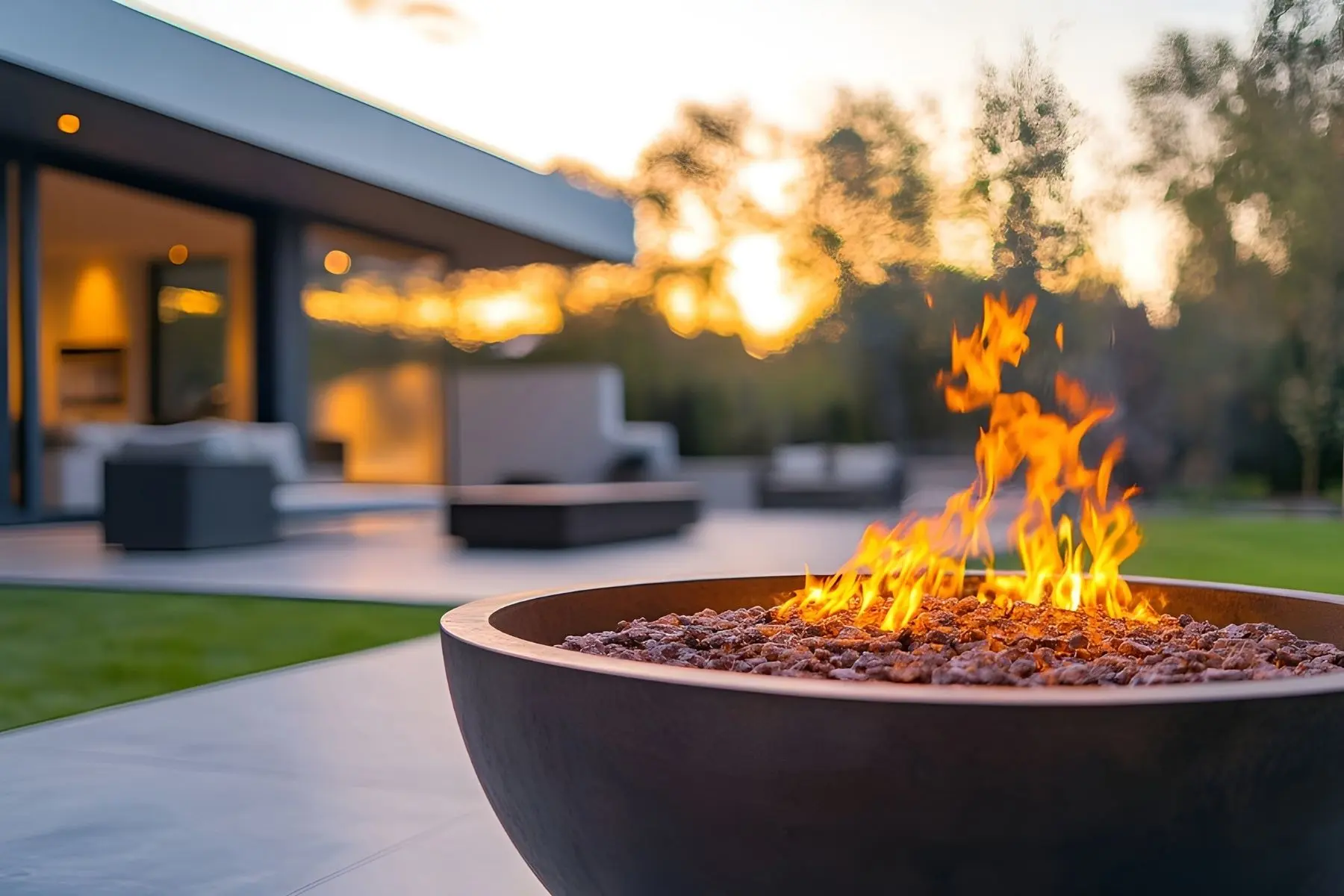
A masonry or stone enclosure with a burner, fed by a natural gas line or propane, starts with a switch or key valve.
A stone or steel ring on a non-combustible base gives real flame and crackle, with smoke and ember management to plan for.
Seating set below grade around the fire cuts wind but needs drainage so it does not fill with rain.
A freestanding bowl or low table is the lightest option and works on small patios with clear overhead space.
Placing the flame at seat-wall height keeps it out of kids' reach and lets guests sit on the wall itself.
A long, narrow trough suits modern terraces and works as a divider between spaces.
 Outdoor fireplaces If you want a vented, taller flame at the edge of a terrace, a fireplace solves wind and smoke differently.
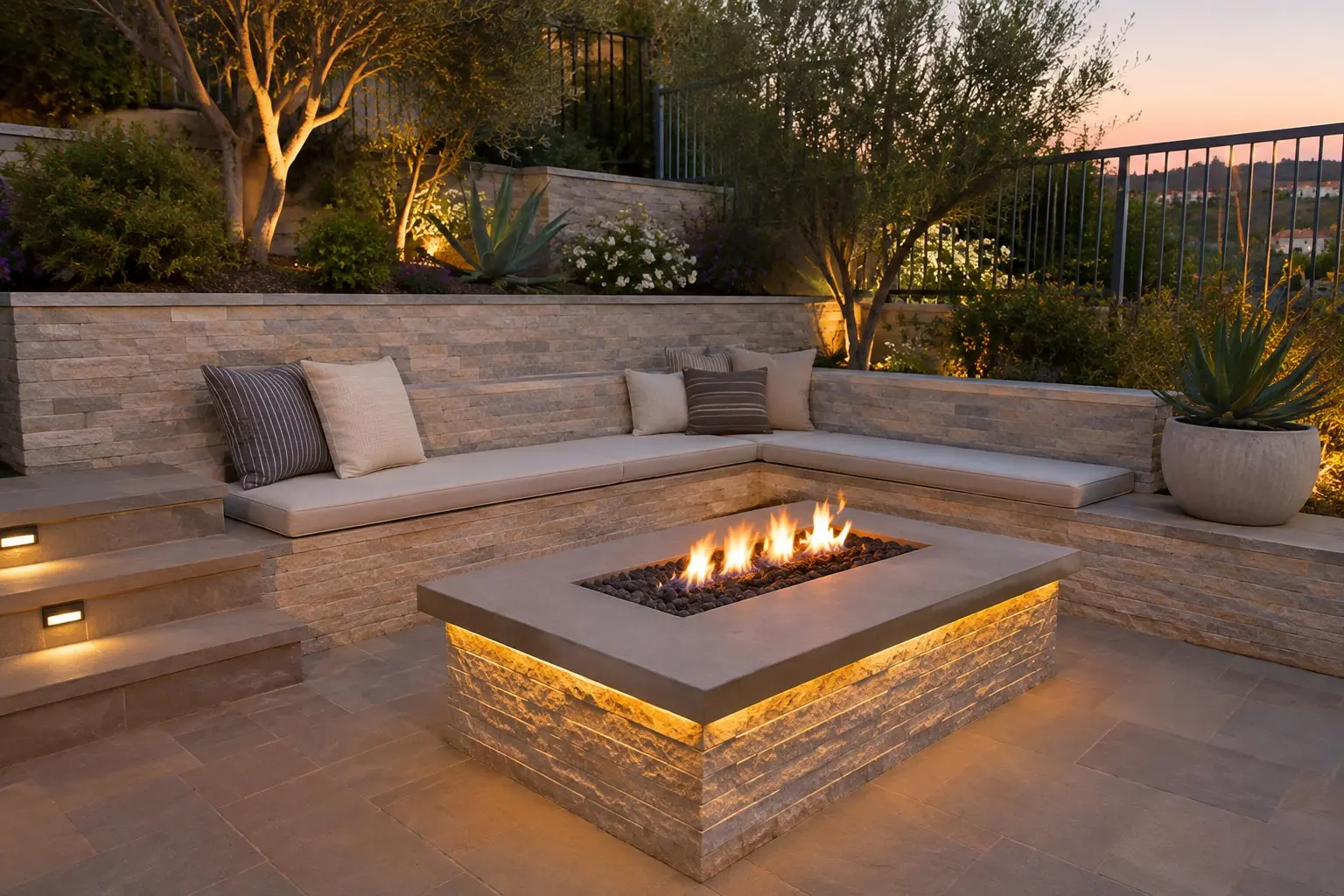 Paver patios A paved apron under and around the pit carries seating and keeps embers off lawn or mulch.
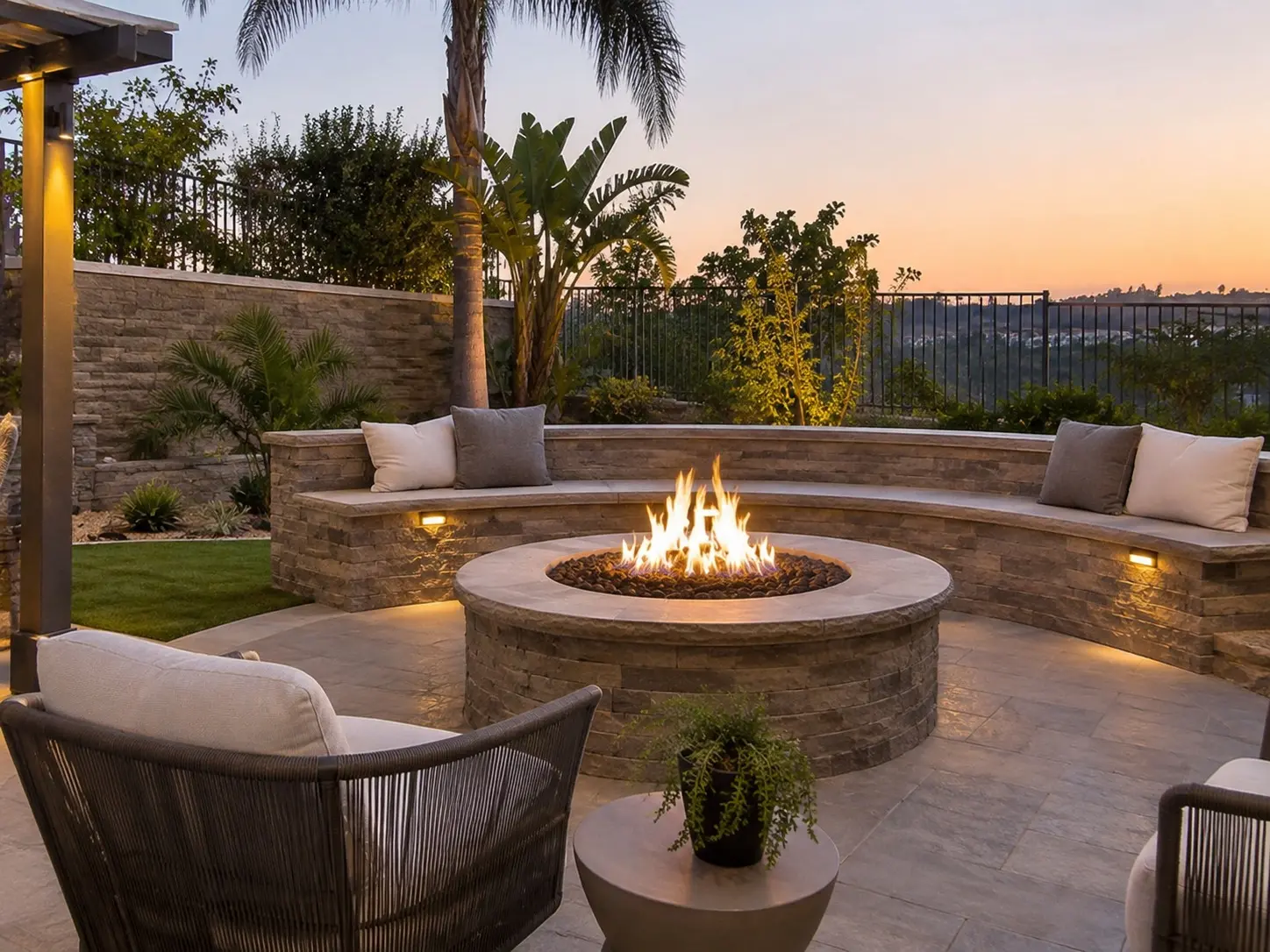 Natural stone hardscaping Stone veneer, boulders and flagstone are the usual finishes for pit walls and surrounds.
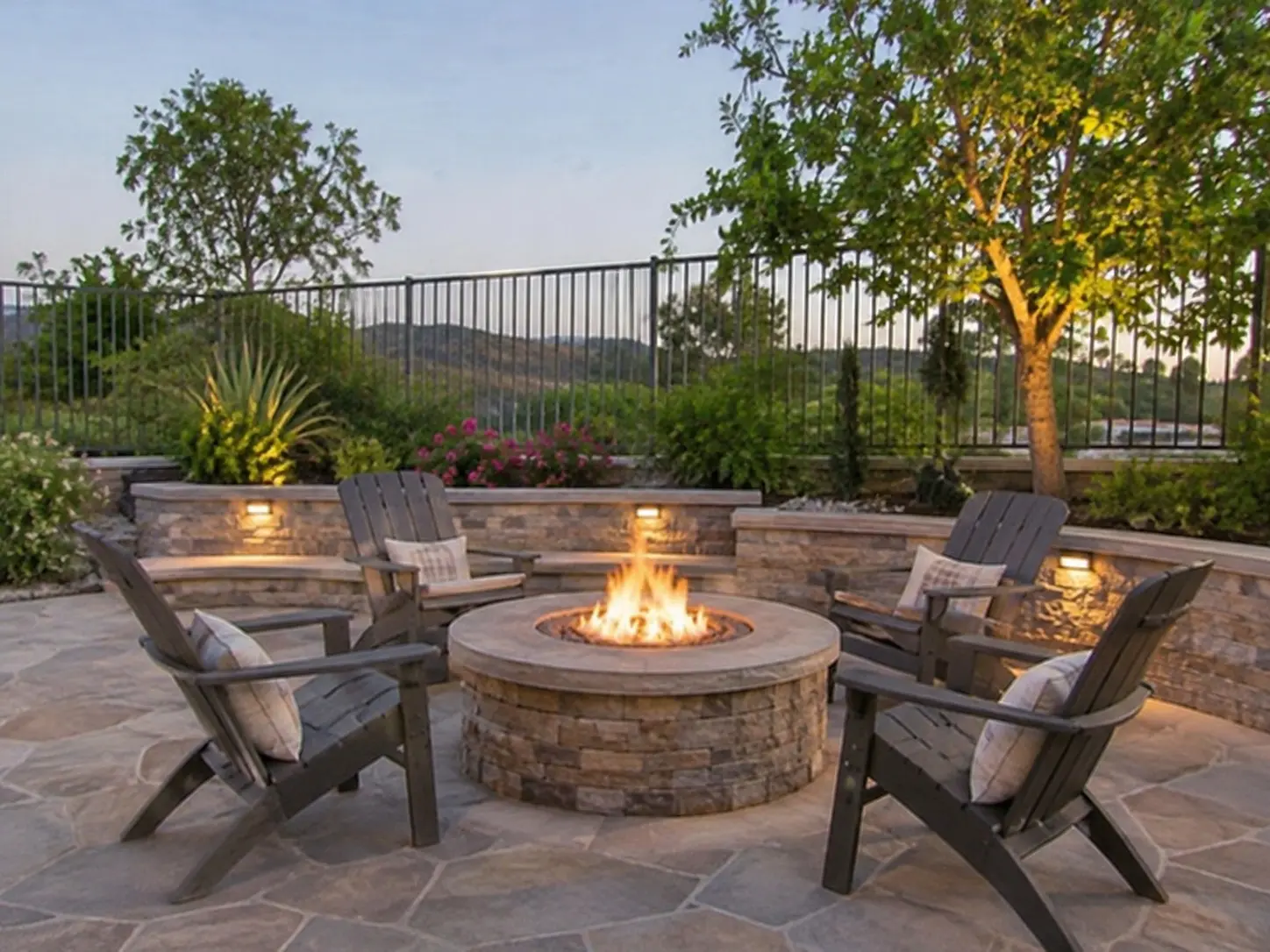
Heat is what separates a fire pit from any other wall. Ordinary concrete block and some natural stones can crack or spall when they get very hot repeatedly, so the inner ring is typically lined with firebrick or a steel insert that takes the heat instead.
The finish stone around it can be anything you like, but dense, low-moisture stone behaves better than soft, layered or very porous types. Where the pit sits on pavers, a continuous, level pad gives chairs a stable footing.
Keep the pit well away from the house, fences, eaves and overhanging branches; manufacturers and local fire rules set the minimums.
Dry grasses, palm fronds and low branches ignite easily, so clear them and avoid planting flammable species within reach.
Seating 3 to 4 feet from the flame usually feels warm without being harsh; adjust to the pit's size and fuel.
Gas pits need an easy shutoff; wood pits need a way to fully douse embers, plus a hose or bucket nearby.
A small drain or weep path in the base stops standing water from cracking the liner during rain.
Begin by marking the footprint with chalk or a hose and sitting in place with chairs. Then check the ground: a pit should sit on a level, compacted, non-combustible surface, not on grass or wood decking.
Gas lines and electrical ignition must be installed and inspected by qualified trade professionals under local rules. Call 811 before any digging, and confirm whether a permit or HOA approval applies.
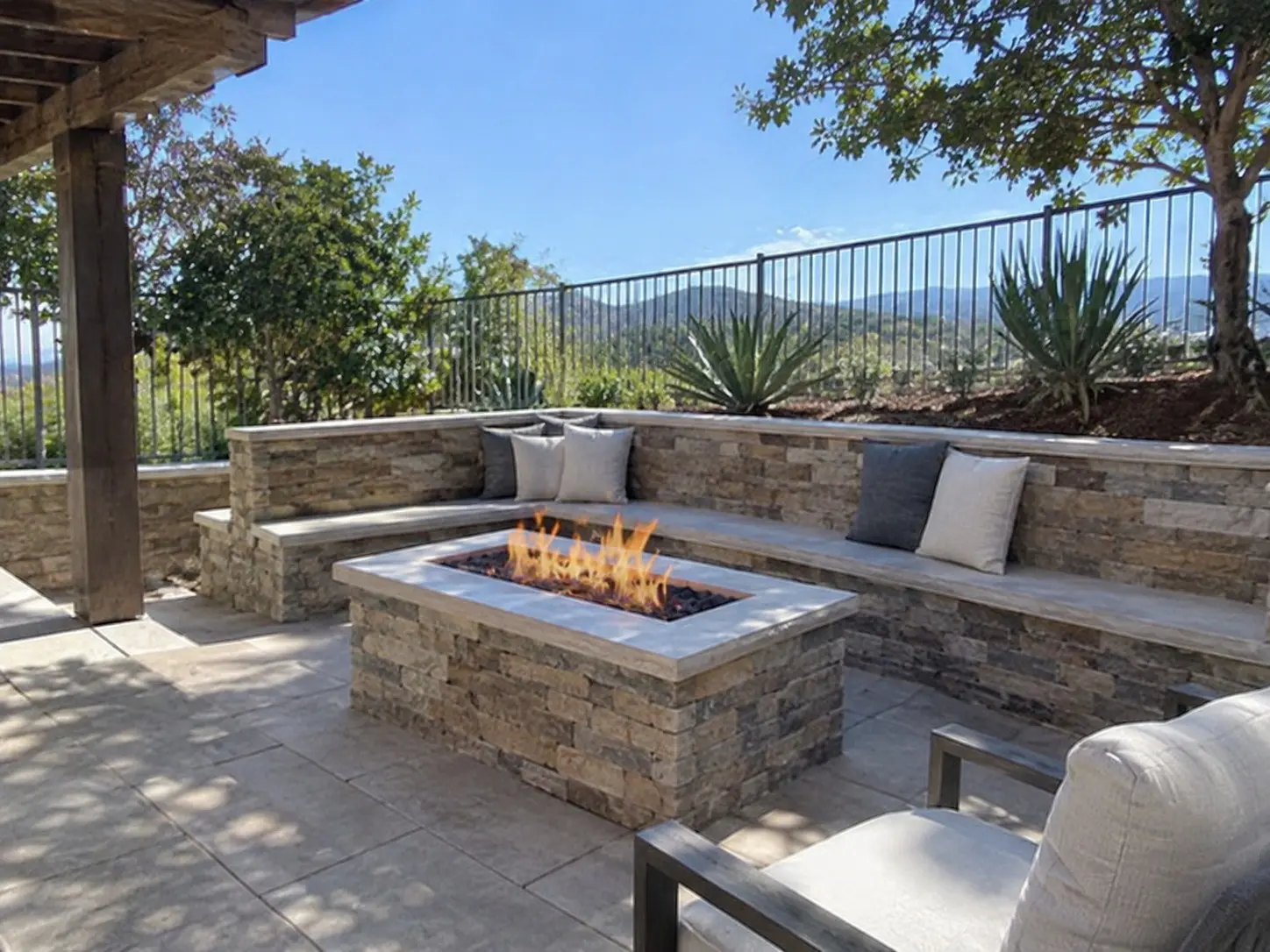 Describe your site A photo of the yard and the pit location lets planning start with the real clearances. All services See how patios, walls and seating relate to a fire feature before choosing a layout. Service areas Local fire and air-quality rules vary by city, so confirm which jurisdiction your yard falls into.
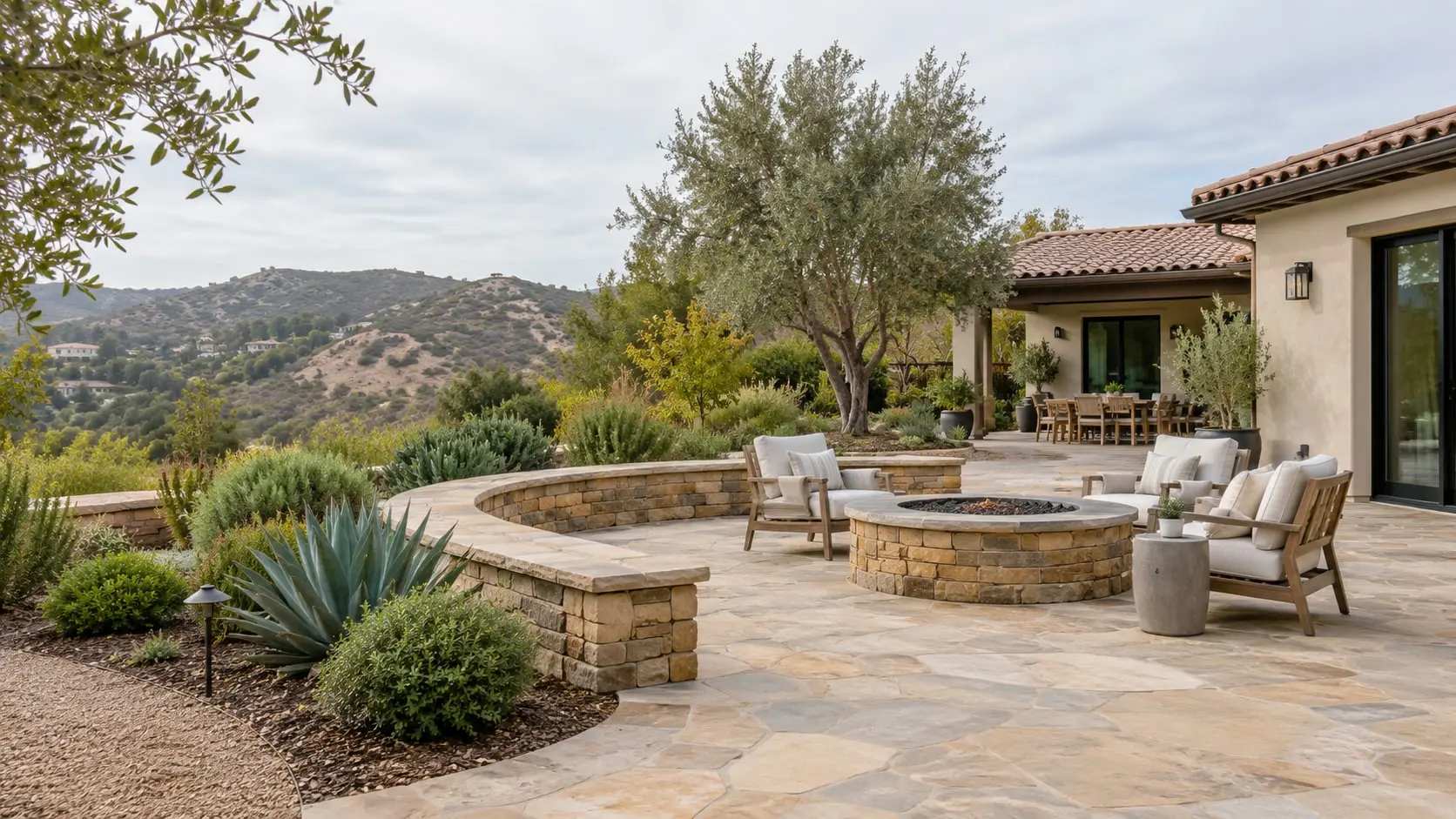
A fire pit can hug a curved wall, sit on a raised paver terrace, or float as a bowl among agave. Each setting changes the seating arc, the wind exposure and the amount of base work underneath.
Hillside sites often call for a level pad cut into the slope or built up behind a low retaining edge.
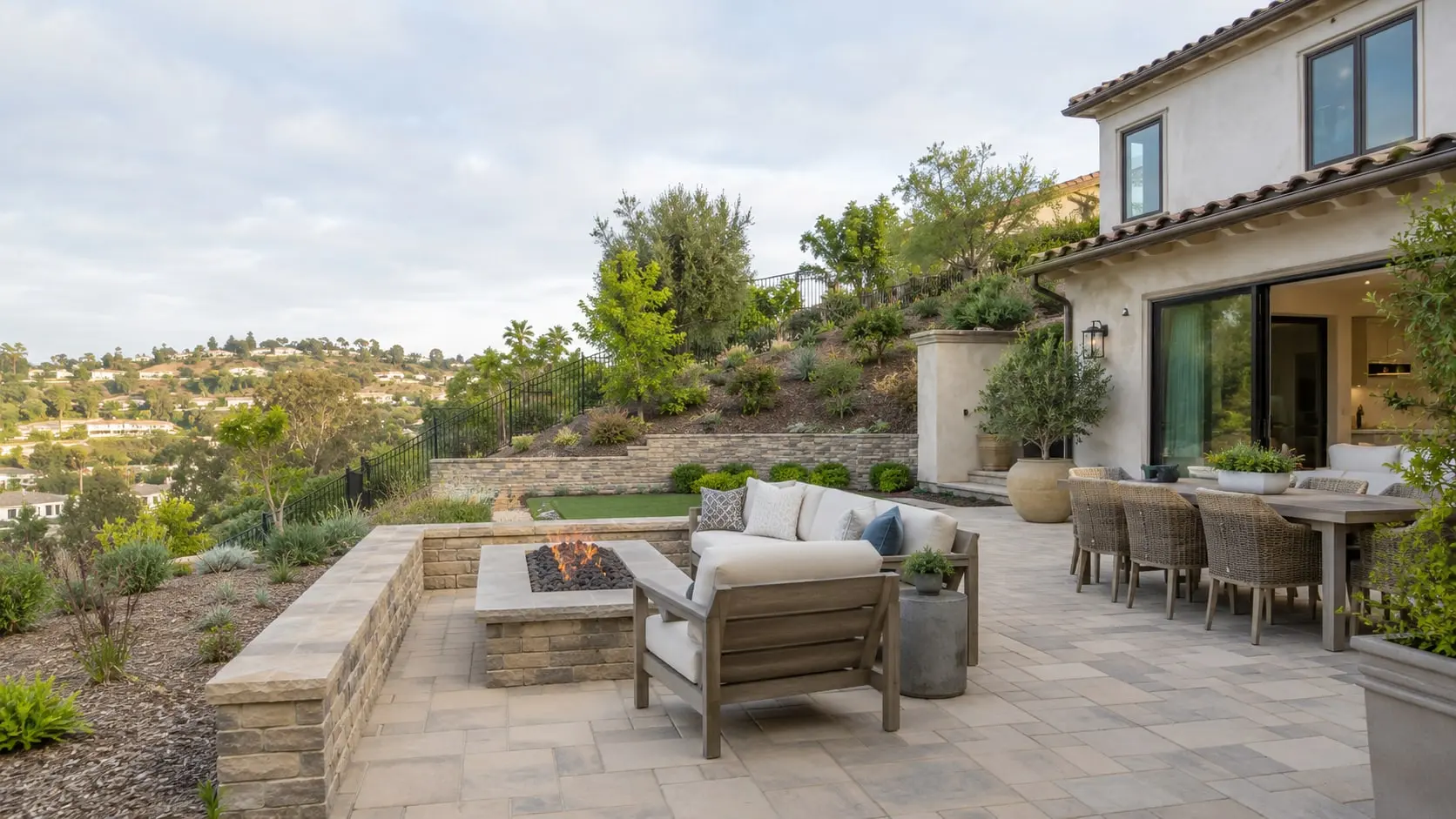
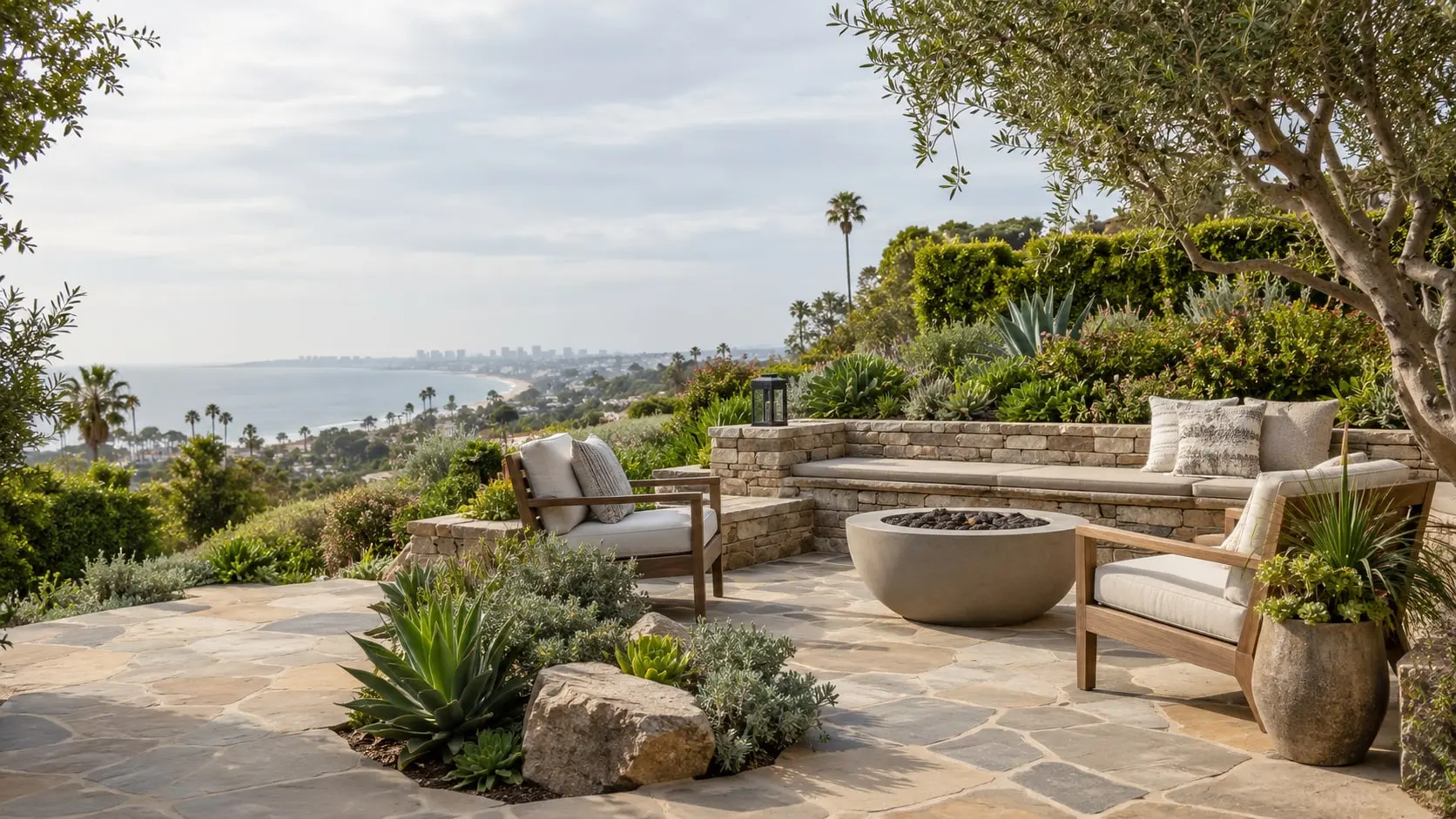
The fuel you choose affects smoke, upkeep and which rules apply.
Starts at a switch, burns clean and fits where a line can be run.
Works where no gas line exists and can be hidden in a vented compartment.
Delivers real fire but brings smoke, sparks and more rules.
Clarity before you begin
It depends on your jurisdiction. Air-quality rules, fire-season restrictions and HOA covenants can limit or ban wood fires, so check with your city fire department, the regional air district and your association before building.
A common target is roughly 3 to 4 feet, but the size of the pit and the fuel change that. Move chairs in a trial setup before committing to a wall height.
Only if the pit is rated for it and sits on a proper heat-shielding base. Most built-in pits belong on pavers, concrete or compacted stone instead.
Possibly, especially for a gas line or a permanent structure. Ask your building and fire departments, and confirm with your HOA if you have one.
Size, wall material, fuel type, how much base and utility work is needed, and the surrounding seating. A gas line run across the yard often matters more than the pit itself.