Best Hardscape Materials for San Diego’s Climate
San Diego’s climate is remarkably mild — but that mild Mediterranean climate still creates specific demands on outdoor hardscape materials that most homeowners and even some contractors underestimate. The combination of coastal salt air, UV intensity, clay soils, occasional heavy rains, and year-round outdoor use creates a demanding environment that separates materials that hold up from materials that don’t.
Understanding San Diego’s Climate Demands on Hardscape
UV Exposure
San Diego averages 266 sunny days per year — among the highest in the continental US. UV exposure degrades sealers, fades pigments in lower-quality concrete pavers, and degrades the resin binders in engineered quartz stone. Materials that are rated for full outdoor UV exposure hold their appearance significantly better than materials that are only marginally suitable.
Salt Air (Coastal Properties)
Within 3-5 miles of the coast, salt air is a real factor. Salt infiltrates porous materials, accelerates corrosion on metal hardware, and damages sealers. Coastal material selection needs to account for this. A concrete paver that performs perfectly in Escondido may show salt damage in Coronado within 5-8 years.
Expansive Clay Soils (Inland Areas)
Escondido, El Cajon, Chula Vista, and much of inland San Diego County have expansive clay soils. Clay swells when wet and shrinks when dry, creating heave-and-settle cycles that work on the sub-base of any hardscape. Materials that are smaller in unit size (pavers vs. large concrete slabs) handle this movement much better because the joints allow micro-movement.
Heavy Seasonal Rains
San Diego’s rainy season (November through March) can deliver significant rainfall in compressed events. Hardscape surfaces need adequate drainage design and joints that allow water to pass through or drain away. Impervious surfaces without drainage plans create flooding and sub-base erosion.
Best Paving Materials for San Diego
Travertine — Excellent for Most Applications
Travertine is one of the best-performing paving materials for San Diego’s climate. Reasons:
- UV stability: Natural stone does not fade or change color with UV exposure. A travertine patio installed in 2006 looks the same tone as one installed in 2026.
- Heat performance: Light-toned travertine (ivory, cream) stays 20-30°F cooler than dark concrete pavers in full sun.
- Durability: Natural stone is essentially indestructible under normal residential use. Freeze-thaw cycles that damage stone in northern climates are essentially absent in San Diego.
- Coastal performance: Filled and sealed travertine handles salt air well. The key is the sealer — unsealed travertine absorbs salt and degrades over time in coastal zones.
Best applications: Patios, pool surrounds, terrace paving, walkways. Not recommended for: Vehicle-load driveways (unfilled travertine is too soft), unsealed installation in marine zones.
Concrete Pavers — Versatile and Reliable
Quality concrete pavers (Belgard, Pavestone, EP Henry, Tremron) perform excellently in San Diego when properly installed. Key considerations:
- Color stability: Premium concrete pavers use through-body pigment and UV stabilizers that maintain color for 10-20 years. Budget pavers use surface-applied color that fades much faster.
- Density: Dense concrete pavers (water absorption under 5%) resist salt infiltration. Lower-density units show salt damage faster in coastal areas.
- Heat: Dark charcoal concrete pavers in full San Diego sun can exceed 140-150°F surface temperature. Choose lighter tones for sun-exposed patios.
Best applications: Patios, driveways, walkways, pool decks. Not recommended for: Areas where heat underfoot is a concern (choose travertine or light-toned pavers instead).
Porcelain Pavers — The Premium Coastal Solution
Porcelain pavers (20mm thickness, rated for exterior use) are our top recommendation for Coronado, coastal Del Mar, Oceanside beachfront, and Coronado Island properties. Properties:
- Zero water absorption: No salt infiltration possible. The definitive coastal paver.
- UV stability: Porcelain is fired ceramic — UV cannot affect the color.
- Maintenance: Near zero. No sealing required. Hose clean.
- Durability: Extremely hard surface. Chip-resistant.
- Downsides: Higher material cost ($28-$45/sq ft installed). Heavier than concrete pavers (professional installation required). Grout or sand joint options limit flexibility.
Best applications: Coastal patios, pool decks, outdoor kitchen surfaces.
Natural Flagstone — The Organic Option
Arizona flagstone (warm tan and rust), Pennsylvania bluestone, and local quartzite are excellent for walkways and informal patio areas. For San Diego:
- Mortar-set flagstone performs very well in San Diego’s mild climate — the dry conditions prevent the freeze-thaw damage that cracks mortar in northern states.
- Dry-set flagstone (set in sand) shifts more in clay-heavy soils but is easier to re-level.
- Sealing: Flagstone in coastal areas benefits from sealing. Inland installations can go without if staining from planters or organic debris is not a concern.
Best Countertop Materials for San Diego Outdoor Kitchens
GFRC (Glass Fiber Reinforced Concrete): Our top recommendation. Can be cast in any shape, accepts integral color, handles thermal expansion without cracking, and performs well outdoors. Seal with silane/siloxane sealer annually.
Natural quartzite: Harder than granite, excellent UV stability, performs well in outdoor environments. Price premium over concrete.
Granite: Good outdoor performer but some granite varieties are susceptible to weathering in coastal salt air. Choose a dense, low-porosity granite variety.
Avoid outdoors: Standard engineered quartz (contains resin binders that UV degrades), unsealed concrete (stains quickly), and ceramic tile (grout absorbs in outdoor conditions).
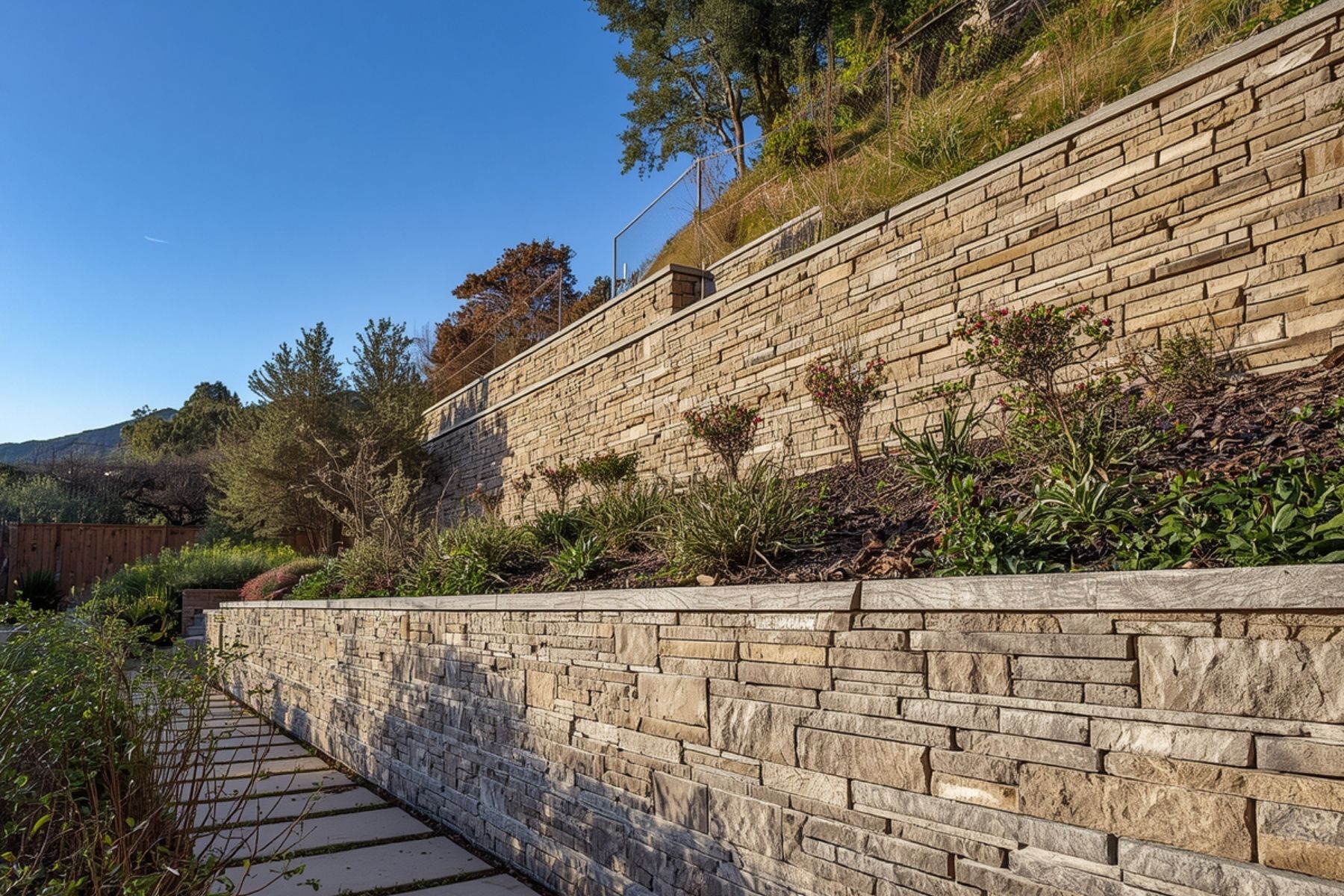
Best Hardscape Materials for San Diego Retaining Walls
Segmental retaining wall block (Versa-Lok, Belgard, Allan Block): Concrete product, excellent UV and salt stability. Landscape walls up to 4 ft without engineering.
CMU (concrete masonry unit) block: Structural workhorse. With reinforced rebar core and engineered design, handles any height. Veneered with stone, stucco, or cultured stone facing.
Natural stone facing: Limestone, quartzite, and fieldstone provide excellent long-term durability when properly installed with drainage. Avoid soft sedimentary stones (sandstone, some limestone varieties) that degrade in wet climates.
Material Selection Summary by San Diego Microclimate
| Location | Primary Recommendation | Notes |
|---|---|---|
| Coronado, coastal Del Mar | Porcelain paver | Zero salt absorption |
| La Jolla, Encinitas coastal | Filled/sealed travertine or porcelain | Either works with proper sealing |
| Carlsbad, North County inland | Concrete pavers (dense, quality brand) | Standard spec works fine |
| Escondido, East County | Light-toned concrete pavers | Clay soil — deep base required |
| Chula Vista | Medium-tone concrete pavers | Same clay soil requirements |
Questions About Material Selection?
San Diego Hardscaping has been specifying materials for San Diego’s diverse microclimates for over 15 years. We bring samples to every consultation and can set test sections of your top two or three choices before you commit to a full installation.
Call (619) 949-1833 or fill out our contact form. Free consultations, fixed-price quotes.